The 2004 Honda CR-V, part of the robust 2nd Generation (2002-2006) powered by the dependable K24 engine, has earned its reputation for longevity. However, like any vehicle approaching two decades of service, especially those exposed to corrosive road conditions, the exhaust system becomes a primary point of failure. The rear muffler and the flange connecting it to the mid-pipe are particularly vulnerable to rust damage caused by moisture and heat cycling.
Muffler replacement is a common necessity, announced by signs ranging from an irritating rumble to an alarming roar. While many might consider this a minor annoyance, a failed muffler or, more critically, an exhaust leak, presents a serious safety hazard. Exhaust systems handle noxious gases, including colorless and odorless poisonous carbon monoxide. Any leak can introduce these gases into the cabin, making prompt and professional repair—or informed DIY replacement—a critical maintenance task, not just a fix for noise.
The Rationale for DIY Replacement
For a repair that primarily involves replacing a rusted-out component and ensuring a proper seal, the cost of professional service can be surprisingly steep. Estimates for a full exhaust muffler replacement on a Honda CR-V hover around $994 to $1,031. While the labor component itself is estimated to be relatively low ($75 to $110), the total cost often includes the high price of replacement parts or the unnecessary replacement of attached pipe sections. By undertaking this task oneself, an owner can achieve massive savings while gaining a thorough understanding of their vehicle’s undercarriage.
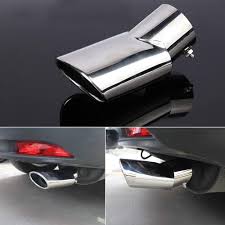
Symptoms That Demand for Honda CRV Rear Muffler Replacement
A vehicle’s exhaust system generally operates in silence when functioning correctly. When the rear muffler begins to fail, the symptoms are immediate and noticeable:
- Loud Noises: The most obvious sign is increased noise, which may manifest as a deep roaring or, if the leak is small or concentrated, a distinct popping or hissing sound.
- Engine Backfire: A significant exhaust leak, particularly if it compromises pressure regulation, can lead to the engine backfiring or running inefficiently. This inefficiency will also typically result in a noticeable reduction in fuel economy.
- Vibrations and Odors: Excessive rust can cause components to become loose, leading to vibrations felt in the steering wheel, foot pedals, or even the car seat. More critically, a bad muffler can produce noxious odors, a clear sign that exhaust gases are not being properly routed away from the vehicle cabin.
It is essential, however, to correctly diagnose the noise. On the 2004 CR-V and its close relative, the Honda Element, persistent rear-end noises are sometimes incorrectly attributed to the exhaust when the true culprit is worn rear stabilizer bushings. If the noise is a clunk or squeak related to suspension movement rather than engine operation, a different repair is required.
Preparation and Procurement: Gathering Your Arsenal
Successful exhaust work requires more than just standard wrenches; it demands specialized tools and chemical aids to conquer rust, which is the chief antagonist in this repair.
Tools of the Trade: Essential Gear List
Preparing a comprehensive toolkit not only saves time but prevents mid-repair frustration, especially when dealing with seized components.
Table 1: Necessary Tools and Rust Mitigation Supplies
| Tool Category | Specific Items Required | Purpose & Context |
|---|---|---|
| Lifting & Safety | Floor Jack, Jack Stands (rated 2+ tons), Wheel Chocks | Mandatory safety equipment; use designated frame points for stability. |
| Removal Tools | 13mm or 14mm Socket/Wrench, Breaker Bar, Torque Wrench | Breaker bar is essential for initial loosening; Torque wrench is non-negotiable for correct sealing tension (25 ft-lbs). |
| Rust & Cleaning | Propane/MAPP Gas Torch, Wire Brush, Penetrating Oil (PB Blaster/Liquid Wrench/Kroil) | Essential for overcoming seized bolts; WD-40 is generally insufficient. |
| Hanger Removal Aids | Channel Locks/Multi-grips, Silicone Paste/Grease | The expert DIY method for separating rubber hangers without specialized tools. |
| Verification Tools | Spray Bottle & Dish Soap | Used for the highly effective soapy water leak test. |
Selecting the Right Muffler and Gasket
The critical step in procurement is ensuring component compatibility. For the 2002-2006 CR-V, the OEM rear muffler part number is typically 18030-S9A-A02, though this may have been superseded from earlier versions. Direct-fit aftermarket mufflers are also available from manufacturers like BRExhaust or MagnaFlow, often offered as part of complete exhaust system kits.
Gasket Selection is Critical
The mating surface between the rear muffler and the mid-pipe requires a robust gasket to prevent leaks. The exhaust components operate under extreme heat and pressure, so the gasket must perfectly match the diameter of the piping. A standard OEM replacement gasket, such as part number 18393-SH3-S00, features an internal diameter (ID) specified between 52.5MM and 53.5MM. However, replacement kits often utilize slightly different dimensions, sometimes leading to aftermarket gaskets with IDs up to 2-9/16 inches (65mm).
It is imperative that the new gasket matches the flange of the replacement muffler and the existing mid-pipe. An incorrectly sized or mismatched gasket—too large or too small—will fail to seal properly, regardless of how meticulously the bolts are torqued down. When ordering an aftermarket kit, confirming the gasket specifications provided or, ideally, physically measuring the replacement muffler’s pipe opening against the mid-pipe is the surest way to guarantee a leak-free connection.
Penetrating Oils: Winning the Rust Battle Before It Starts
Rust mitigation must be approached with the correct chemistry. A common error among inexperienced technicians is relying on general lubricants like WD-40. Expert consensus confirms that WD-40 is not formulated as an effective penetrating oil; it performs poorly compared to specialized penetrants when dealing with seized fasteners.
For exhaust bolts cemented by decades of corrosion and heat cycling, specialized penetrating fluids such as PB Blaster, Liquid Wrench, or Kroil are vastly superior. Furthermore, experienced mechanics often turn to a homemade solution: a blend of Acetone and Automatic Transmission Fluid (ATF). Studies have shown this mixture to be highly effective, sometimes ranking second only to commercial specialty sprays in penetration tests. However, caution is necessary, as Acetone is a harsh chemical that can damage paint, plastic, and even certain types of rubber gloves.
For severely stuck nuts that resist commercial sprays, an unconventional yet highly effective approach utilized by seasoned technicians is the application of Oil of Wintergreen. This product, often ordered from a local pharmacy, contains natural acidic properties that can slowly dissolve the rust binding the threads, allowing the fasteners to be removed with surprisingly little effort after soaking.
Lifting the CR-V Securely
Before any component removal begins, safety must be prioritized, especially since this job requires working directly underneath the vehicle. The 2004 CR-V is a compact utility vehicle (CUV) weighing over 3,000 pounds, making improper support incredibly dangerous.
Proper Vehicle Support
Never work beneath a vehicle supported only by a hydraulic jack. Jack stands are mandatory. To safely raise the vehicle, locate the structural jack points. The recommended points are behind the front wheels and in front of the rear wheels on the sill. For greater overall clearance, central jack points exist under the engine and the rear end, as indicated in the owner’s manual.
If additional height is needed to slide a floor jack or jack stands underneath, it is acceptable to use wood blocks under the tires to raise the vehicle slightly. However, support must always transfer to properly rated jack stands placed on solid frame members. Materials like cinder blocks or bricks should never be used as support structures due to their unpredictable failure modes under concentrated load. Once lifted, the stands should be checked to ensure stability before commencing work.
Overcoming Seized Bolts and Sticky Hangers
The challenge in replacing a decade-plus-old exhaust component is not the wrenching itself, but the removal of components that have become fused together.
Phase 1: The Flange Attack (Mid-Pipe Connection)
The rear muffler connects to the mid-pipe (or resonator pipe) via a two-bolt flange sealed by a gasket. These bolts, constantly subjected to exhaust heat and road spray, are almost always severely rusted.
- Chemical Pre-Treatment: The night before the repair, liberally apply penetrating oil (e.g., Liquid Wrench or PB Blaster) to the flange nuts and threads, allowing maximum time for penetration.
- Physical Preparation: Before attempting to turn the nuts, use a wire brush to clean the visible threads. Removing surface rust and dirt helps the nut turn and reduces the risk of stripping the threads.
- Applying Heat (The Professional Technique): When penetrating oil alone fails, thermal cycling is the most reliable method. Use a propane or MAPP gas torch to apply heat directly to the nuts and the surrounding flange metal. Heat the nuts until they achieve a dull cherry-red color. This extreme heat causes the metal to expand, breaking the molecular bonds of the corrosion. After the initial heating, allow the assembly to cool slightly, and then spray penetrating oil onto the threads. The cooling action draws the oil deeply into the newly created micro-fissures in the rust.
- Removal: Using the appropriate socket size (typically 13mm or 14mm, depending on the replacement hardware used) and a breaker bar, attempt to loosen the nuts. Be prepared for the bolts to shear off, which is a common occurrence on older exhaust systems. If the bolts cannot be turned or they shear, a reciprocating saw (Sawzall) with a metal cutting blade or an angle grinder may be necessary to cut the bolts or the flange for removal.
Phase 2: Hanger Havoc
Honda rubber exhaust hanger bushings are notoriously stubborn, designed to absorb vibration but also incredibly difficult to remove by hand.
- Lubrication: Thorough lubrication is key. Spray the rubber hanger isolators and the metal posts of the exhaust system with silicone paste, white lithium grease, or even soapy water to reduce friction.
- The Improvised Tool Technique: While specialized exhaust hanger removal tools exist, a simple pair of channel locks or multi-grips is highly effective and commonly available. Place one jaw of the channel locks on the metal nub at the end of the hanger rod (the retainer point), and the other jaw on the rubber bushing itself, adjacent to the pipe. By squeezing the grips, the rubber is compressed, forcing it to slide over the retaining nub and off the hanger rod like “magic”.
- Muffler Removal: Once the flange is disconnected and the hangers are free, the heavy muffler assembly must be carefully guided out. The tailpipe section must be maneuvered back and then lifted up and over the rear control arm to clear the suspension components.
Installation: A Smooth Fit
Installing the new muffler requires diligence, especially concerning surface preparation, to ensure a long-lasting, leak-free seal.
Surface Preparation and Gasket Placement
The most crucial step in installation is often overlooked: cleaning the existing mid-pipe flange. The primary cause of new exhaust gasket failure is the presence of residual rust, old gasket material, or pitting on the mating surface of the old pipe.
Using a wire brush, sandpaper, or a scraping tool, aggressively clean the mid-pipe flange where it meets the new muffler. The goal is to create a smooth, clean metal surface for the new gasket to compress against. If deep pitting or holes are found, the mid-pipe section itself may need to be replaced or professionally repaired via welding, as trying to seal a gasket against severely compromised metal is futile.
Once the flange is clean, place the new exhaust flange gasket (e.g., OEM part number 18393-SH3-S00 or the equivalent supplied with the kit) onto the cleaned mid-pipe flange, ensuring it sits flush and is oriented correctly.
Mounting the New Muffler
- Alignment: Guide the new muffler assembly back into position, ensuring it is fed over the rear control arm.
- Hanger Re-Engagement: Slide the new muffler’s hanger rods back into the existing rubber isolators. Applying a small amount of silicone paste or grease to the rods before insertion will dramatically ease the process.
- Fastening the Flange: Install the new hardware supplied with the muffler kit. Most direct-fit mufflers come with new bolts, nuts, and spring washers. These components are designed to maintain a specific tension during the heat cycles of the exhaust system. Start all hardware loosely by hand to ensure proper alignment before proceeding to the final, critical step of torquing.
The Critical Step: Torque Specifications and Final Sealing
The flange connecting the muffler to the mid-pipe must be tightened to a precise tension. Unlike typical chassis bolts, exhaust flanges require controlled compression to seal the gasket without warping the metal under intense heat. Applying too little torque causes leaks; applying too much torque warps the flange, crushes the gasket prematurely, and risks snapping the bolts.
The Importance of Progressive Torque Tightening
Improperly torqued flanges result in exhaust system leaks, associated component failure (gaskets and studs), and premature system fatigue. For multi-bolt flanges, the nuts must be secured using a progressive, rotating sequence to distribute the load evenly.
Recommended Torque Values
The 2004 CR-V utilizes the K24 engine, and the specifications for the exhaust system components are typically standardized across the platform. While generalized advice sometimes incorrectly suggests excessively high torque values (up to 100 ft-lbs) , the authoritative technical guidance for similar connections (such as the catalytic converter to mid-pipe nut) on the K-series engine specifies a much lower, precise value.
Table 2: Critical Exhaust Flange Torque Specifications
| Connection Point | Recommended Torque (ft-lbs) | Purpose & Context |
|---|---|---|
| Rear Muffler to Mid-Pipe Flange (M8/M10 bolts) | 25 ft-lbs | Ensures proper gasket compression without warping the flange. This value is sourced from K-series exhaust specifications. |
| Flange Tightening Sequence | Progressive Increase | Tighten evenly in three stages (e.g., 8 ft-lbs, 16 ft-lbs, then final 25 ft-lbs). |
The Torque Procedure (Achieving 25 ft-lbs)
The process requires a reliable torque wrench set to the final value of 25 ft-lbs.
- First Pass (Initial Compression): Set the torque wrench to approximately 8 ft-lbs (30% of target). Tighten both nuts evenly.
- Second Pass (Mid-Compression): Increase the torque wrench to 16 ft-lbs (60% of target). Tighten both nuts evenly.
- Final Pass (Sealing): Set the torque wrench to the final 25 ft-lbs. Tighten both nuts evenly, alternating between them until the wrench clicks at the specified value for both fasteners. This method ensures uniform compression across the gasket, maximizing the integrity of the seal.
Post-Installation Verification: The Sound Test
The replacement is complete, but the job is not finished until a successful seal verification has been performed. This final verification is necessary because even a well-torqued flange can develop a micro-leak if the seating surface was slightly imperfect.
Initial Idle Check
Lower the vehicle safely and start the engine. Let the engine idle for a few minutes. Listen carefully beneath the car, paying close attention to the newly installed flange. Any immediate hissing, tapping, or loud popping suggests a major leak or incorrect component alignment. If metallic rattling occurs, ensure no part of the new muffler is touching a heat shield or the suspension components (especially the control arm that the pipe was maneuvered around).
The Soapy Water Leak Test
For subtle leaks that may be inaudible over engine noise, the tried-and-true method utilizes basic fluid dynamics.
- Preparation: Mix a generous solution of dish soap and water in a spray bottle.
- Application: With the engine idling, generating exhaust pressure, spray the soapy mixture generously around the new gasket flange and all adjacent joints or welds.
- Inspection: Anywhere air or exhaust gas is escaping, bubbles will immediately form, clearly identifying the leak location.
If bubbles are observed, the most likely issues are debris on the gasket mating surface or inadequate torque. If a minor leak persists, slightly increasing the torque (while strictly remaining below 30 ft-lbs to protect the bolts and flange) may resolve it. If the leak is severe, the pipe must be unbolted, the flange surface re-cleaned, and the gasket checked for damage or misalignment.
Final Test Drive Considerations
A brief test drive allows the exhaust system to reach operating temperature and confirm that all components remain secure during driving and acceleration. If new noises, distinct from the engine’s normal operation, arise—specifically clunking or thumping sounds that correspond to bumps or suspension travel—it may indicate that while the muffler replacement was successful, other existing chassis problems, such as those common rear stabilizer link issues, require attention.
Conclusion
Replacing the rear muffler on a 2004 Honda CR-V is a repair well within the scope of an experienced DIYer. The true difficulty lies not in the procedure, but in overcoming the effects of rust and heat cycling on the exhaust fasteners. By utilizing specialized penetrating oils, employing heat where necessary, and meticulously adhering to the precise torque specifications of 25 ft-lbs for the flange connection, a mechanic-grade, leak-free installation can be achieved.
This effort not only restores the vehicle to its intended quiet operation and ensures maximum fuel efficiency but, most importantly, eliminates the serious risk posed by exhaust leaks, protecting passengers from poisonous gases. By integrating preparation techniques focused on rust mitigation and verification methods like the soapy water test, the DIY approach provides a robust and cost-effective solution to a common maintenance issue for this generation of dependable Honda CUVs.