There’s a reason the Honda Accord has been on American roads for over four decades. It’s not marketing. It’s not luck. It’s the kind of track record that only comes from consistently building cars that refuse to quit.
But here’s the thing — not every Accord year is created equal. Some generations are legendary. Others have quirks that cost owners money down the road. If you’re shopping for an Accord — new, certified pre-owned, or used — knowing which model years shine and which ones stumble can save you thousands.
This Honda Accord review focuses on exactly that: reliability across the model years, so you walk away knowing precisely where to put your money.
Why the Honda Accord Still Matters
Before diving into the years, it’s worth understanding what makes the Accord worth talking about at all.
The Accord has consistently ranked among the top midsize sedans in America, and for good reason. It balances everyday practicality with driving pleasure in a way few competitors manage. It’s roomy enough for a family, fuel-efficient enough for a commuter, and durable enough to hit 200,000 miles with proper care.
J.D. Power, Consumer Reports, and RepairPal have regularly scored the Accord above average for reliability. But those scores are averages — and averages hide the story. Let’s go year by year, generation by generation.
The Best Honda Accord Years for Reliability
1. 2013–2017 Honda Accord (9th Generation)
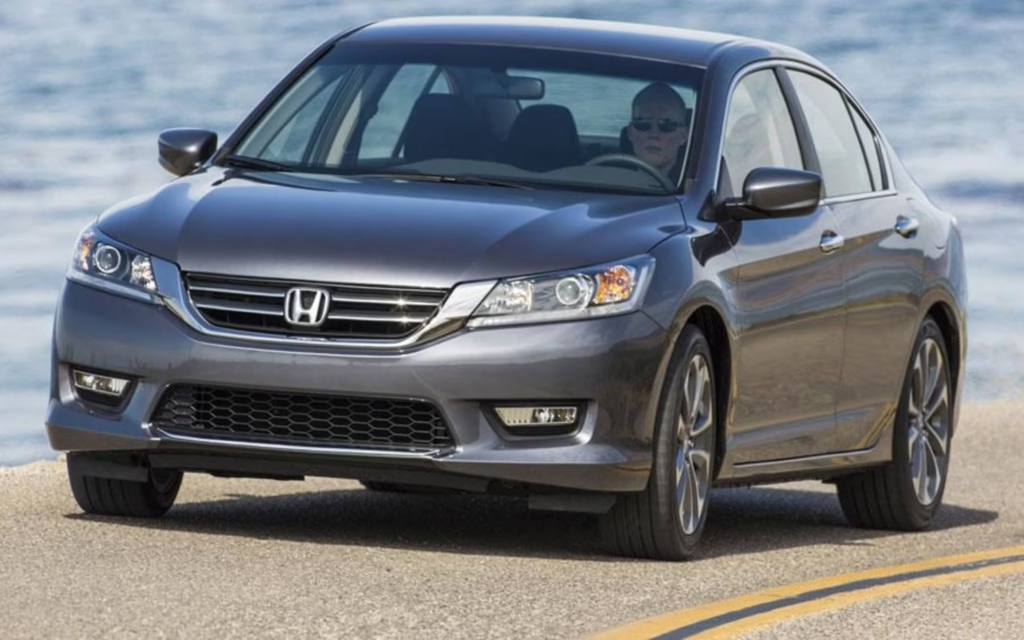
The 9th generation Accord is one of the most beloved in the model’s history — and one of the most practical used-car buys you can make today.
Why it earns its reputation:
The 2.4L four-cylinder engine paired with a CVT or six-speed automatic is a proven combination. These cars regularly cross 150,000 to 200,000 miles with only routine maintenance. The V6 option adds punch without sacrificing longevity.
Consumer Reports gave the 2013–2017 Accord high marks across reliability categories. Owners report minimal surprise repairs — mostly wear-and-tear items like brake pads, tires, and the occasional sensor.
Best years in this range: 2015 and 2016 stand out. By those years, Honda had ironed out early-production kinks, and the platform was mature. The 2016 Accord in particular earns consistently high owner satisfaction scores.
What to watch for: Some early 2013 models had minor transmission hesitation complaints. Not a dealbreaker, but worth a test drive and inspection.
2. 2018–2022 Honda Accord (10th Generation)
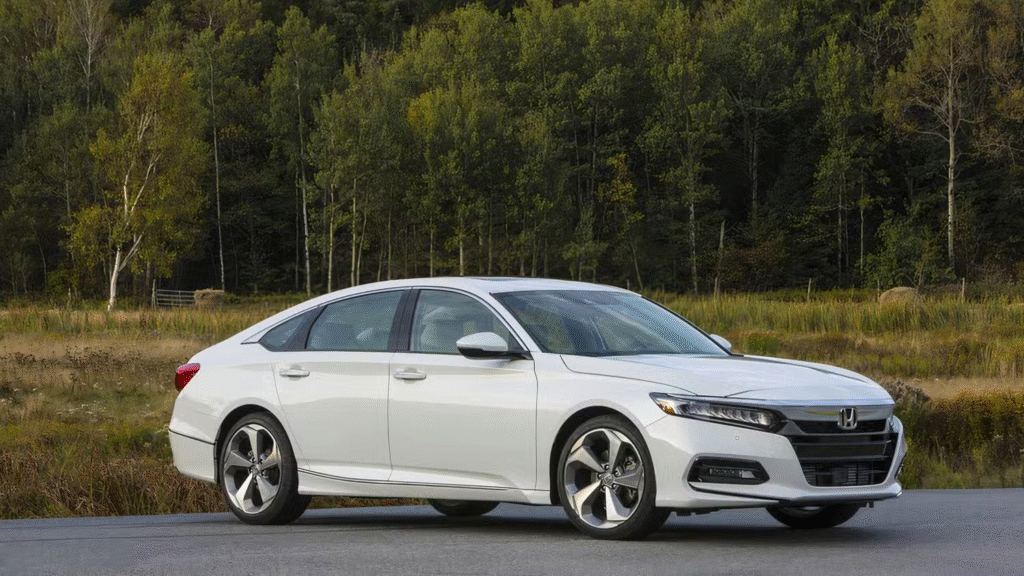
If you ask most automotive journalists which Accord generation is the finest, the 10th generation gets the most votes. It’s the one that changed the conversation about what a midsize sedan could be.
Why it’s exceptional:
Honda redesigned the Accord from the ground up for 2018. The turbocharged 1.5L and 2.0L four-cylinder engines replaced the older V6 — and they outperformed expectations. Lighter, more aerodynamic, and more refined, this Accord also added Honda Sensing (a suite of driver-assistance tech) as standard equipment, which is rare in this segment.
Reliability data on these models is strong. RepairPal rates the Accord above average for the segment. Common owner complaints are minor — occasional software glitches and some early reports of oil dilution in the 1.5T engine in cold climates.
Best years in this range: 2019 and 2020 are the sweet spots. The oil dilution issue — where fuel could mix with oil under specific cold-weather driving patterns — was largely addressed by Honda through updated software. By 2019, most owners in all climates report clean bills of health.
What to watch for: If you drive short trips in a cold climate, ask about the 1.5T’s service history. The 2.0T engine avoids this issue entirely if it’s a concern for you.
3. 2003–2007 Honda Accord (7th Generation)
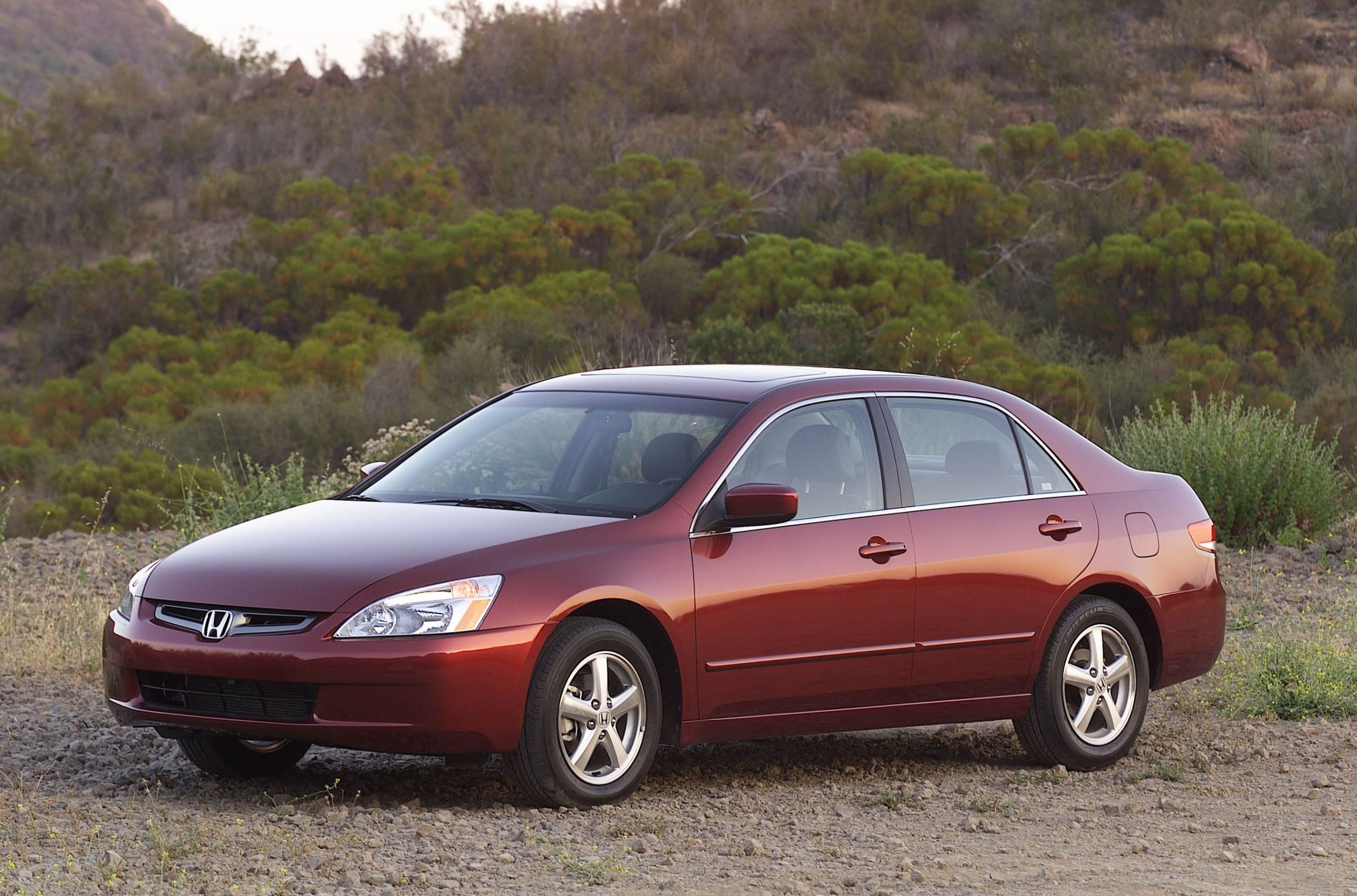
This generation deserves a mention not because it’s flashy, but because it’s legendary for one reason: it simply does not die.
Why long-time Honda owners love it:
The 7th gen Accord is mechanically simple, parts are cheap, and technicians know these cars inside and out. The 2.4L K24 four-cylinder engine in particular is considered one of Honda’s all-time greats — robust, naturally aspirated, and easy to maintain.
You’ll find these cars with 200,000+ miles on the clock still running strong. For a buyer on a tighter budget who wants maximum reliability per dollar spent, a well-maintained 7th gen Accord is hard to beat.
Best years in this range: 2005, 2006, and 2007 are generally considered the most refined years of this generation.
What to watch for: At this age, you’re buying maintenance history more than the car itself. Check for timing chain wear, inspect the transmission fluid, and look for rust in rust-prone regions.
Honda Accord Years to Approach Carefully
No honest Honda Accord review skips the rough patches. Knowing which years to be cautious about is just as valuable as knowing which ones to seek out.
2008–2012 (8th Generation) — Good, But With Caveats
The 8th gen Accord is a capable car, but it introduced some mechanical transitions that created reliability variation.
The 4-cylinder models are generally fine. The V6 paired with an automatic transmission had documented cases of torque converter shudder in some 2008–2010 models — a known issue that Honda addressed through service campaigns but one worth verifying on any used example.
Also, early 2008 models had some AC compressor issues. Not universal, but worth a pre-purchase inspection.
Bottom line: Not a bad car — but inspect carefully and know the service history before buying.
Early 2000s V6 Models (6th Generation, 1998–2002) — Transmission Watch
The 1998–2002 Accord with a V6 and automatic transmission has a documented history of automatic transmission failure, often before 100,000 miles. Honda extended warranties and issued settlements related to this issue.
If you’re considering one of these, stick to the 4-cylinder version, which doesn’t share this problem. The 4-cyl engine in this era is excellent — it’s specifically the V6 automatic combo that carries risk.
What Makes a “Reliable” Honda Accord? The Real Factors
Reliability isn’t just about the year badge on the car. Here’s what actually determines whether your Accord stays healthy:
Maintenance history. A 2013 Accord with consistent oil changes at the right intervals will outlast a 2020 Accord that was neglected. Ask for service records.
Climate. Rust is a real concern in northern states with road salt. Even a mechanically sound Accord can have frame issues in high-salt environments. Always inspect the undercarriage.
Mileage vs. age ratio. A 10-year-old car with 60,000 miles might have more rubber and seal degradation than one with 120,000 miles but better maintenance. Age affects rubber components. Mileage affects mechanical wear. Factor in both.
Accident history. Run a vehicle history report. Frame damage — even repaired — can affect long-term alignment, handling, and safety.
Honda Accord vs. the Competition — Reliability in Context
The Toyota Camry is the Accord’s eternal rival, and the comparison is fair. The Camry has an equally strong reliability record. But the Accord typically offers a more engaging drive and, in many model years, stronger resale value retention.
The Nissan Altima and Chevrolet Malibu don’t match either car’s long-term reliability record in Consumer Reports data. The Accord and Camry consistently trade the top two spots — it really comes down to whether you prefer Honda’s driving feel or Toyota’s ultra-conservative engineering approach.
For buyers who want reliability and driver engagement, the Accord wins.
Which Honda Accord Year Should You Actually Buy?
Here’s the honest summary:
- Best overall used buy: 2019–2020 Honda Accord (10th gen) — modern tech, strong reliability, available at reasonable used prices now
- Best budget reliability pick: 2015–2016 Honda Accord (9th gen) — well-sorted, affordable, proven
- Best “run it forever” car: 2005–2007 Honda Accord (7th gen) — mechanically simple, parts everywhere, built to last
- Approach with extra caution: 1998–2002 V6 Automatics, 2008–2010 V6 Automatics
Whatever year you choose, get a pre-purchase inspection from an independent mechanic. No review replaces eyes under the hood.
The Accord’s Legacy Is Earned, Not Inherited
The Honda Accord didn’t earn its reputation through advertising. It earned it by starting every morning, handling every commute, surviving every road trip, and asking very little in return.
The best Honda Accord year isn’t just a number on a calendar — it’s the one that fits your budget, your needs, and comes with a clean history. The generations reviewed here give you the framework to find it.
Now go find yours.
FAQ
Q: Which Honda Accord years should I avoid?
The 1998–2002 V6 automatic models have a documented transmission failure history. The 2008–2010 V6 automatics had torque converter issues. Four-cylinder versions from those eras are generally much safer bets.
Q: How long do Honda Accords typically last?
With consistent maintenance, most Honda Accords reliably reach 200,000 miles. Some well-maintained examples exceed 250,000 miles